
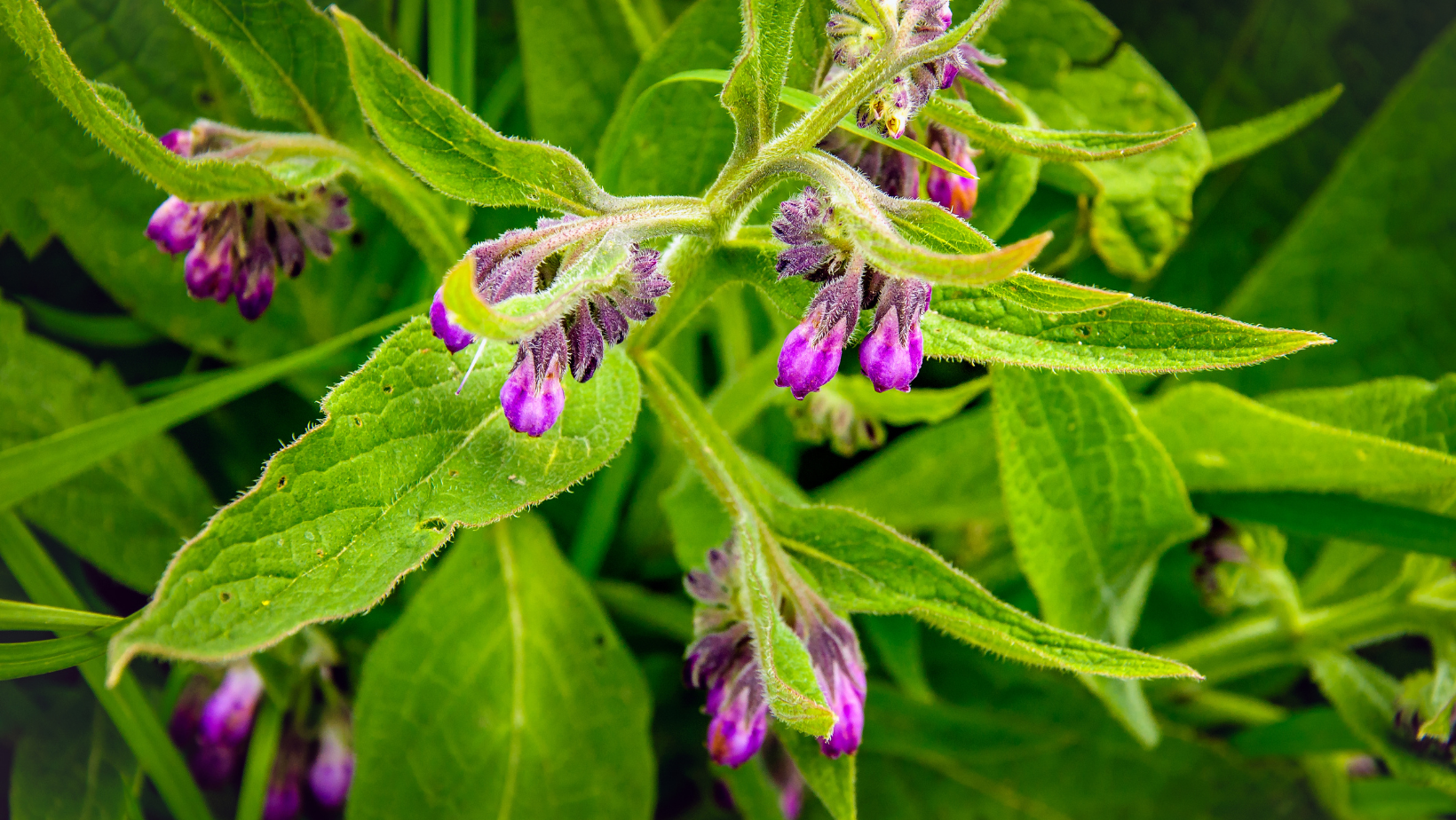
About our Tinctures, Glicerites and Infused Oils
A tincture is an advanced liquid extract crafted through the process of macerating herbs, plants, or other substances in a solvent—most commonly alcohol, but also glycerin or vinegar—to isolate their beneficial compounds. With a longstanding history in traditional herbal medicine, tinctures are often administered orally for expedited absorption, offering a powerful, long-lasting remedy.
An herbal-infused oil is a powerful blend crafted by steeping herbs, flowers, or roots in a carrier oil—such as olive, almond, or jojoba—to harness the plant’s medicinal, aromatic, and therapeutic benefits. Used primarily for topical applications such as balms, salves, and massages, these oils transfer their healing, anti-inflammatory, and soothing properties to the skin.
At Wyld Witchery, we employ traditional methods to craft our tinctures and oils in small, carefully controlled batches. We begin with premium quality herbs, the majority of which are organic (each tincture specifies the certification status of the herbs used). For Tinctures, the herbs are immersed in our chosen medium for 3 to 6 months. For oils, we infuse the herbs in our chosen oil at low temperatures for 10-16 hours to ensure all of the benefits are extracted, with the same process used for Glycerites. The resulting product is a potent, highly concentrated extract that effectively captures the beneficial properties of each plant.
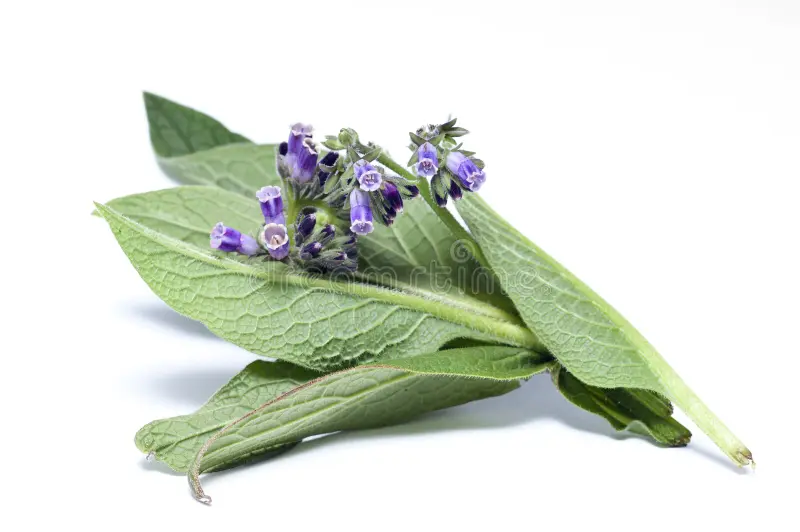
About our Comfrey Extracts
- Scientific Name of Herb: Symphytum officinale
- Plant Family: Boraginaceae
- Parts Used: Leaves and Roots
- Cultivation Method: Certified Organic
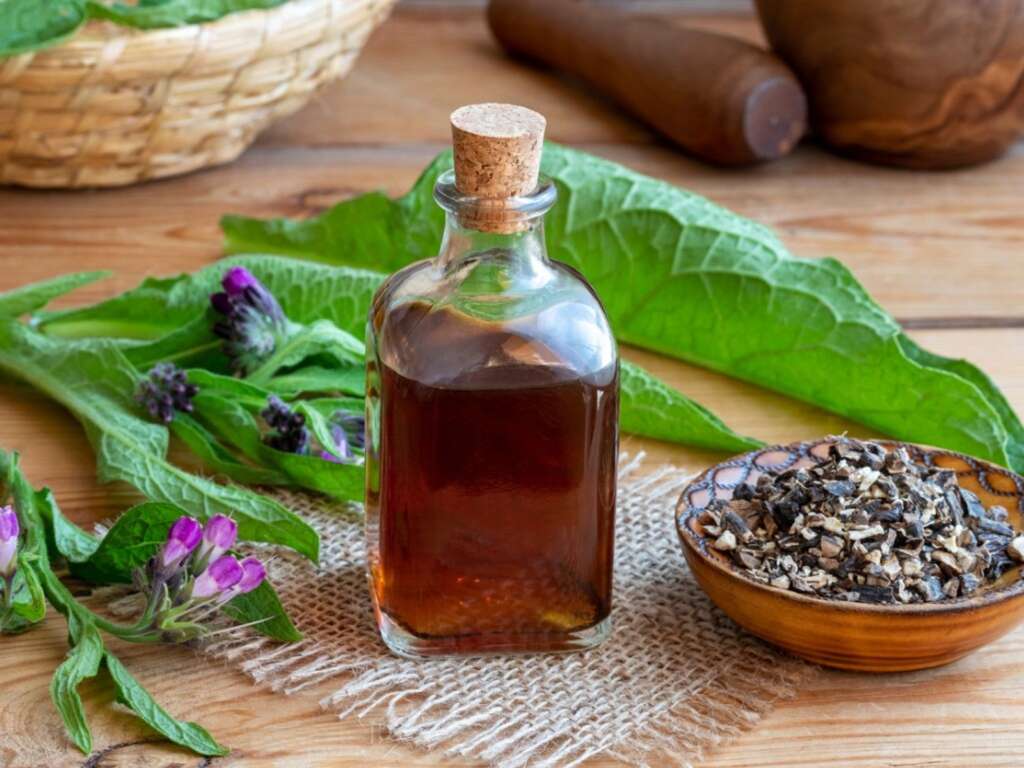
Comfrey Infused Oil
- Medium Used: Jojoba, MCT, or Moringa Oil (Can vary by batch)
- Shelf Life: No limit when kept in a cool and dry place.
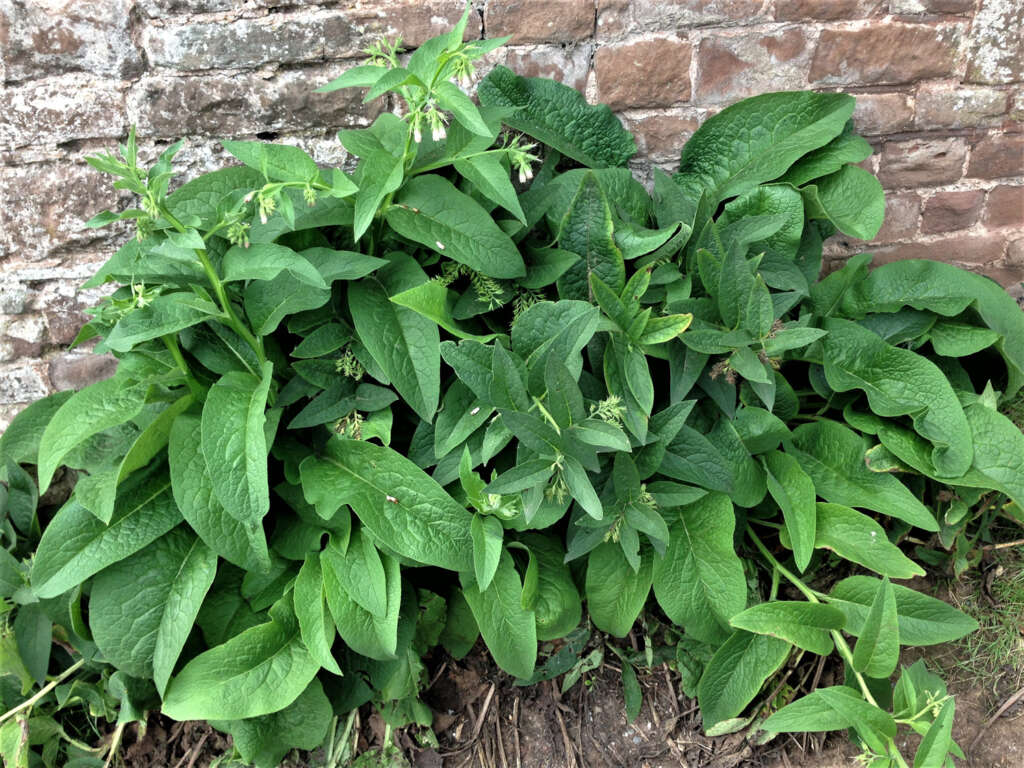
Symphytum officinale (Comfrey) Materia Medica
- Energetics: Cool/Moist
- Tastes: Bitter/Sweet
- Constituents: Mucilage, allantoin, tannins, B12, Vit C, Vit E, inulin, steroidal saponins
- Actions: Anti-inflammatory, Vulnerary, Analgesic, Demulcent, Cell Proliferant
Therapeutic and Heath Benefits
Historically, comfrey was utilized for internal applications; however, contemporary research has illuminated the potential cancer risks associated with such use, primarily linked to its cell proliferation characteristics. Currently, comfrey is deemed safe for external application as an oil or ointment on the skin. The external-use formulations presented here are aligned with these safety guidelines. For any internal use, it is essential to seek guidance from a qualified healthcare professional or herbalist.
- Wounds: Comfrey can be used topically for any sort of wound, abrasion, burn, or bruising of the skin. Comfrey is wonderful in poultices. Dry herbs are mixed with water to make a paste, and the poultice is applied either directly to the wound or on some cheesecloth. In addition to its wound healing effects, studies have shown that comfrey has measurable analgesic (pain-relieving) and anti-inflammatory effects. Comfrey is excellent for large bruises, hematomas, and burns. Don’t use comfrey on puncture wounds or open wounds. Comfrey is a “top-down” healing agent and will close wounds prematurely, causing abscesses.
- Musculoskeletal System: Comfrey’s anti-inflammatory and analgesic properties make it a good topical choice for musculoskeletal pain. It is effective topically for strains, sprains, bruises, arthritis, and the pain of gout. The chemical allantoin in comfrey markedly accelerates cell division rates among fibroblasts, chondroblasts, and osteoblasts, decreasing the healing time of tissue, cartilage, and bones. Allantoin is highly penetrating, so even topical application can markedly decrease the healing time of injured bones or other internal structures.
- Sitz Baths: Comfrey tea makes a wonderful sitz bath for inflammations, hemorrhoids, venereal warts, or postpartum tears following childbirth. Make a cold infusion and put it in a basin or pan large enough to sit in.

Contraindications and Interactions
Comfrey contains pyrrolizidine alkaloids (PAs), which are associated with significant liver toxicity. IT IS NOT RECOMMENDED TO CONSUME COMFREY INTERNALLY! The U.S. FDA has advised that all comfrey products intended for oral use be withdrawn from the market due to serious safety issues.
Pregnancy and breastfeeding: Comfrey is considered unsafe for both oral and topical application during pregnancy and breastfeeding. The PAs in comfrey are known to be absorbed through the skin, potentially leading to birth defects. Therefore, its use should be avoided.
Broken or damaged skin: Avoid applying comfrey to any broken or damaged skin. Such use may lead to significant exposure to the harmful chemicals in comfrey that can result in liver damage and other serious health implications.
Liver disease: Comfrey may exacerbate liver conditions. Do not apply comfrey topically if you have any liver-related issues. Medications that are hepatotoxic may interact with comfrey, thereby elevating the risk of liver damage.
Medications that enhance the metabolism of other drugs by the liver (Cytochrome P450 3A4 (CYP3A4) inducers) also interact with comfrey:
Comfrey undergoes biotransformation by the liver. Certain drugs may accelerate the liver’s metabolic processing of comfrey, which could alter its therapeutic effects and adverse reactions. Avoid topical use of comfrey if you are currently prescribed any of these medications.
Medicinally Safe Dosages
- For local skin applications: The leaves can be used dried or fresh topically as a poultice.
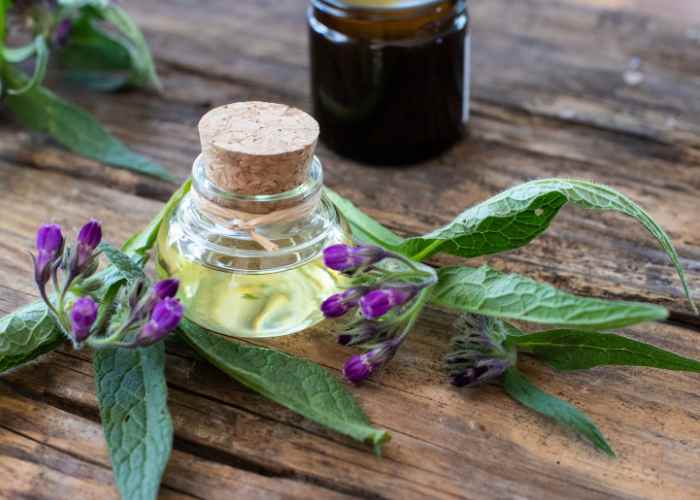
- Infused oil: The oil can be made from all parts of the plant (wilted or dry) and used topically or turned into a salve for easy application.
- NEVER use Comfrey on puncture wounds or open skin.
Storage advice: keep dried leaves in an airtight container away from direct light to preserve volatile oils. Essential oils, tinctures, and infused oils must be stored in dark glass bottles at cool temperatures to avoid oxidation.
Spiritual Uses
Engaging with herbs as a spiritual ally offers a profound opportunity for connection, healing, and personal development. It is crucial to recognize that this work involves establishing a relationship with the essence of the plant. While teas and herbal extracts can facilitate this connection, the depth of engagement ultimately depends on your intention to connect with the spirit of the herb.
The Comfrey spirit ally operates within the root energy center, facilitating grounding and aiding in the processing of challenging and historical trauma. Additionally, it serves as a valuable tool for connecting with ancestors, making it an excellent resource for those engaged in ancestral veneration and reconcilliation.
- Energy Centers: Root
- Elements: Earth
- Planets: Saturn
Comfrey operates at the root center, serving as a robust physical and energetic anchor that enhances stability, safety, and structural repair. Renowned as one of the most effective herbs for grounding, it holds significant value in various therapeutic practices.
Its profound connection with elemental earth and Saturnian energies positions comfrey as a valuable ally in addressing ancestral and family trauma.
Furthermore, it assists individuals who find themselves perpetually in survival mode, enabling them to transcend these limitations. Additionally, it serves as an exceptional resource for those navigating deeply entrenched fears.
Below are some areas where you can engage with Plant Spirit Allies for spiritual work:
- During Meditation or Shamanic Journey
- Journaling
- Spiritual Ceremonies
- Spiritual Baths
- Candle work
- Yoga
- Sound Healing
- Reiki sessions
Essential Guidelines for Spiritual Applications:
- Oil: Apply to the relevant energy center or body area. Incorporate oil into baths and cleansing rituals. Additionally, you may anoint tools and candles—any infused oil can serve as a spiritual oil blend.
- Tea: Heat 8 oz of water until boiling, then allow the water to cool for approximately 30 seconds. Pour this water over 1-2 teaspoons of herbal material. Let the infusion steep for 5-10 minutes, then consume it before or during your ceremony or activity.
- Glycerites: Take 1 ml prior to your ceremony or activity. I
- Tinctures: Take 5-10 drops before your ceremony or activity.
Disclaimer: These guidelines pertain specifically to engaging with this particular plant spirit. Not all herbs are safe for internal use. It is essential to consult with a qualified healthcare professional or herbalist before consuming this or any other herbs internally.